

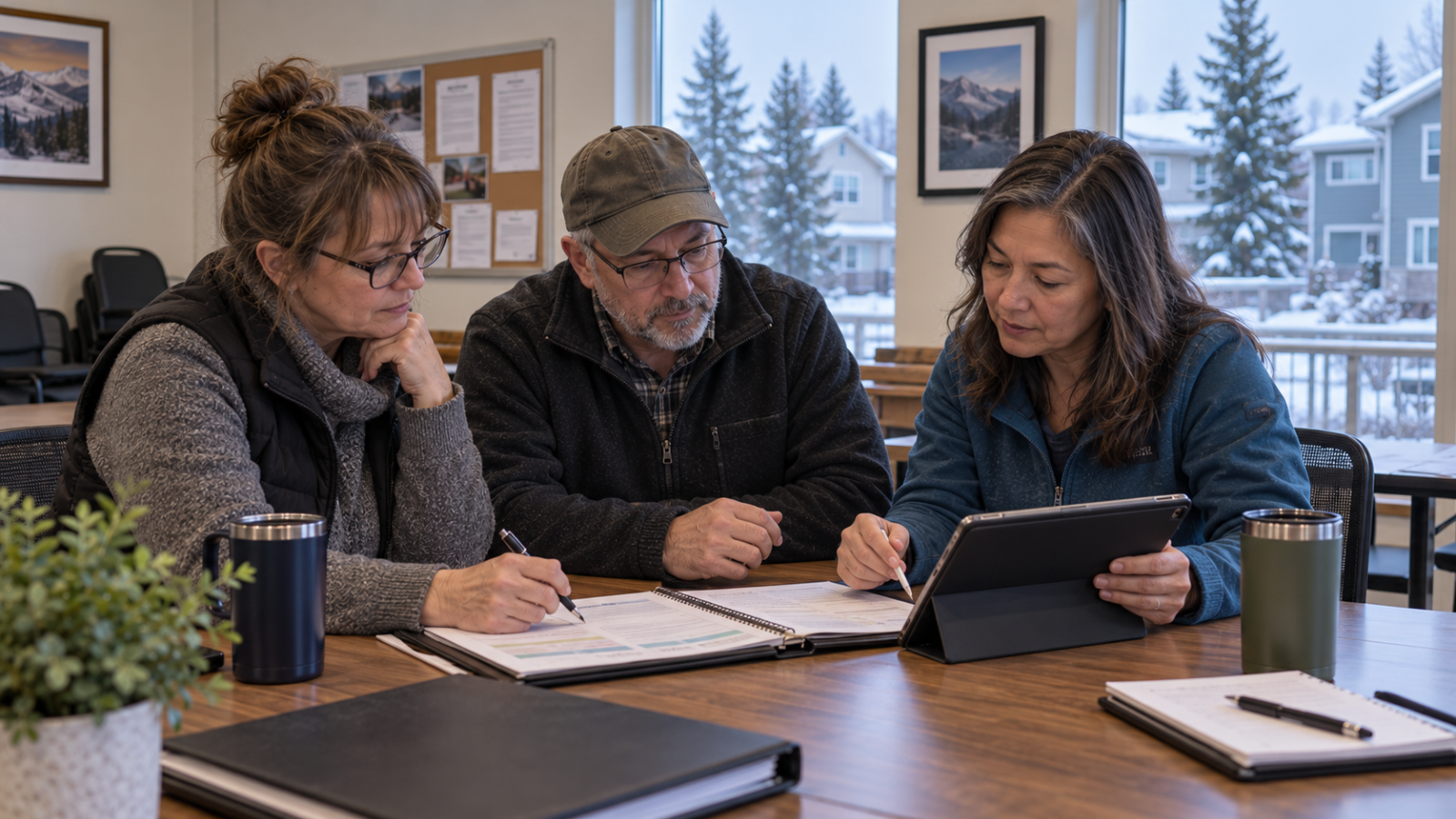
A dependency review connects the vendor booking to the work around it.
Booking a vendor can feel like the point when an association project finally moves forward. A date is on the calendar. Someone has accepted the work. The board can turn to its next agenda item. Yet the project may still depend on access, resident communication, a scope question, or a decision that nobody has assigned.
For Alaska HOA and condominium boards, the useful question is what remains open after the booking. The contractor handles approved work. The association still needs a clear coordination path around that work. A brief dependency review can reveal what must happen before, during, and after the visit.
Confirm what was actually booked
Start with the agreement or approved scope. Is the vendor coming to assess a condition, provide an estimate, perform approved work, or verify a previous repair? These appointments have different outcomes.
An assessment visit should not be reported as a completed repair. A reserved date may depend on weather, materials, access, or another confirmation. A quote does not necessarily authorize the work it describes.
Record the appointment’s purpose in plain language. Include the location, scope, contact, and any known conditions attached to the booking. That allows another authorized person to understand what the visit is intended to accomplish.
Find the decisions still waiting
Review whether the vendor has everything needed to perform the approved task. If a scope detail is unresolved, identify who can clarify it. If a recommendation changes the work, determine how it returns to the appropriate decision-maker.
Do not assume that a coordinator can approve every addition or that every routine question requires the full board. Authority should come from the community’s documents, agreements, approved decisions, and applicable requirements. Use qualified advice when the boundary is uncertain.
The operational objective is to make that boundary visible before work begins. A vendor should know whom to contact with a question, and the contact should know when to coordinate and when to seek another decision.
Treat access as part of the project
A vendor can arrive with the correct equipment and still be unable to reach the approved work area. Consider keys, gates, parking, storage, common-room access, and any arrangements that apply to occupied areas.
Use authorized access procedures. Do not place gate codes, resident information, or security details into public posts or broadly shared planning documents. Keep those instructions in the appropriate controlled channel.
Assign the person who will confirm access before the appointment and the person who receives an access problem during the visit. A contact name alone is not enough if the person is unavailable or lacks the information needed to respond.
Decide what residents need to know
Some projects affect ordinary community routines. A walkway may be temporarily unavailable. Parking arrangements may change. Equipment may be present in a shared area. Other projects have little direct effect on residents.
Determine what information is useful, when it should be communicated, and through which approved channel. Avoid giving residents an unverified completion promise. If timing remains conditional, say so clearly.
Keep a copy of the notice and record when it was shared. If the plan changes, identify who sends the update. The communication task should follow the project rather than end when the first message is posted.
Use a dependency review before the visit
For a significant project, ask five practical questions:
- Is the approved purpose and scope clear?
- Is any decision still required before the vendor can proceed?
- Is access arranged through the authorized process?
- Do affected residents need an update?
- Who records the findings and next action after the visit?
This is an operating framework, not a complete legal or engineering checklist. Adapt it to the project and community. A small routine assignment may need only a short confirmation. A larger project may require additional documentation and professional input.
The Foundation for Community Association Research maintenance report is a recognized association maintenance resource. Boards can consult it for broader maintenance-program context while using their own authorized procedures for individual projects.
A hypothetical lighting project
Imagine a hypothetical townhome association that books a vendor to assess several common-area lighting concerns. The appointment is confirmed, but the board has not decided whether the visit includes replacement work. The vendor also needs access to a controlled utility area.
During the dependency review, management clarifies that the approved visit is an assessment. An authorized person arranges access. The board identifies how any recommendation will be reviewed. Residents receive only the information relevant to their use of the area.
After the visit, the record distinguishes the vendor’s findings from any board decision. The project remains open until the next authorized action is clear. This is an illustrative process, not an actual RPMLF project or technical recommendation.
Capture exceptions while they happen
Projects do not always proceed exactly as expected. A vendor may find another condition, need different materials, or recommend a revised sequence. Weather may affect exterior work. Access may require rescheduling.
Record the exception, its practical effect, and the next decision or action. Avoid treating every change as a failure. The important question is whether the team knows how to respond within the approved authority.
If the change affects residents, update the communication plan. If it affects cost or scope, return it to the appropriate approval process. If no action is possible yet, record what information is missing and when the status will be reviewed again.
Close the assignment with usable evidence
At the end of the visit, capture what the vendor did, what the vendor found, and whether the approved assignment is complete. Retain relevant reports, photographs, invoices, and recommendations in the project file.
An invoice shows a financial transaction. It may not explain every outstanding condition. A completion record should connect the work to its original purpose and identify any remaining follow-up.
Where verification is appropriate, assign it. A nighttime lighting concern may need an evening observation after work. Other projects may need a technical report or a different confirmation method. Let qualified professionals and the approved scope guide the method.
Keep board authority and coordination connected
RPMLF’s association management services describe board support, vendor management, and resident communication. These functions can support execution without replacing decisions that belong to the board.
At the next project review, select one booked vendor visit and identify every open dependency around it. A useful project status tells the board more than the appointment date. It shows what must happen next and who can carry it forward.
This content is provided for general informational and educational purposes only and does not constitute financial, legal, tax, or investment advice. Readers should consult with licensed professionals regarding their specific circumstances.
We are pledged to the letter and spirit of U.S. policy for the achievement of equal housing opportunity throughout the Nation. See Equal Housing Opportunity Statement for more information.
