

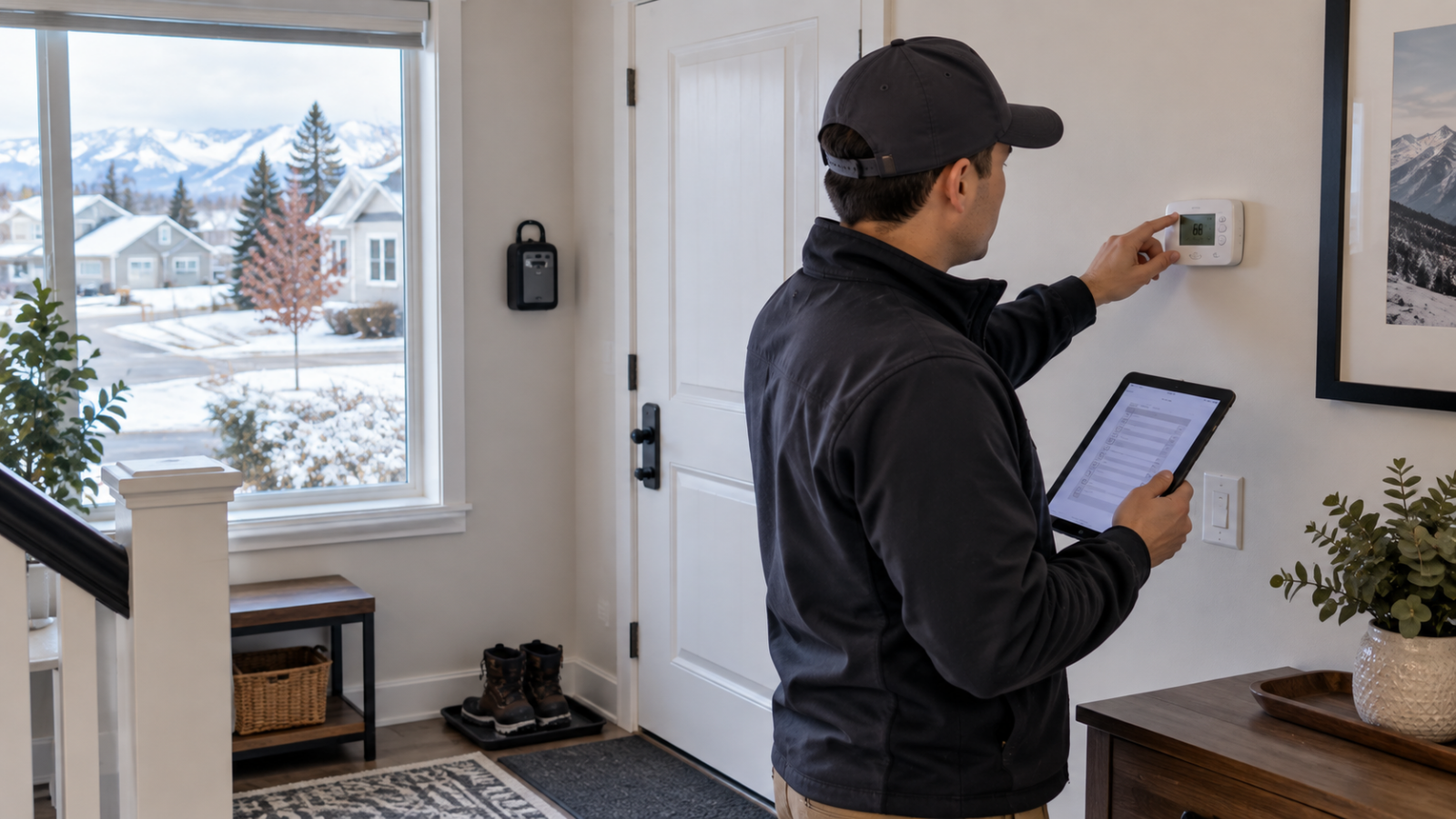
A rental does not become low-maintenance simply because no one is living there. In cold weather, vacancy changes the management problem. A resident is no longer present to notice a falling indoor temperature, a small leak, a tripped breaker, a blocked entry, or an unfamiliar sound from the heating system.
For Anchorage-area owners, the transition from late September into October is a practical time to prepare for that gap. The National Weather Service Anchorage climate page tracks daily conditions against 1991 to 2020 normals, while federal winter guidance recommends preparing homes before cold, snow, and ice create problems. The exact conditions will differ among Anchorage, Eagle River, Chugiak, and the Mat-Su Valley, so the plan should be tied to the property rather than a single date.
A good cold-weather vacancy plan answers five questions: What remains running? Who checks the property? What triggers a response? Who has access? Where is every decision recorded?
Define the Vacancy Window and the Handoff
Start by recording when the current resident’s responsibility ends and when the next responsible party begins. This can be the owner, property manager, turnover vendor, or incoming resident, depending on the lease and management arrangement.
Write down:
- The move-out or possession date
- The expected duration of vacancy
- The person responsible for utilities during that period
- The person responsible for routine property checks
- The person authorized to approve urgent work
- The planned leasing, cleaning, repair, and showing schedule
- Any dates when the property will be inaccessible
Do not leave the handoff implied. A cleaning vendor may assume the owner is monitoring the heat. The owner may assume the leasing agent will notice a problem during showings. A clear assignment prevents those assumptions from becoming the operating plan.
Confirm Insurance and Lender Requirements Early
Vacancy can affect property-insurance terms, required precautions, and claim handling. The Insurance Information Institute advises owners to speak with their insurance professional because standard policies may treat a vacant home differently, and winter protection requirements can vary.
Ask the insurer or agent direct questions:
- When does the policy consider the property vacant or unoccupied?
- Does the policy require a specific inspection frequency?
- Are there minimum heating, winterization, alarm, or water-shutoff conditions?
- Does the carrier need advance notice of an extended vacancy?
- What records should be retained if a loss occurs?
If the property has financing, check whether the lender imposes additional insurance or occupancy requirements. Save the answers with the property file. Do not rely on a general rule from another owner, another carrier, or a previous policy.
Choose a Heat and Plumbing Strategy for This Property
Avoid setting a universal indoor temperature or telling every owner to drain the plumbing. The right plan depends on the heating system, pipe locations, insulation, crawlspace, water source, fire-protection systems, appliance connections, and insurer requirements.
Use a qualified heating or plumbing professional when the property’s setup is unclear. The American Red Cross notes that pipes most exposed to freezing include outdoor lines and pipes in unheated areas such as crawlspaces, basements, garages, and cabinets against exterior walls. Its guidance also recommends insulating exposed pipes and keeping garage doors closed when water lines are present.
For a vacant rental, document the selected approach rather than keeping it as a verbal instruction. Record:
- Thermostat setting and who may change it
- Heating-system service status
- Fuel or utility account status
- Vulnerable plumbing locations
- Water shutoff location and access
- Approved steps for severe cold
- Conditions that require a plumber or heating professional
If a smart thermostat or temperature sensor is used, confirm that it has power, connectivity, current contact information, and an actual response plan. An alert is useful only when someone is assigned to act on it.
Build a Recorded Property-Check Routine
A vacancy inspection is not a drive-by glance. The scope and frequency should reflect the property, weather, policy requirements, and work underway.
A practical check may include:
- Exterior access, doors, windows, and visible damage
- Snow or ice affecting entry and service access
- Indoor temperature and heating-system status
- Signs of water, unusual moisture, or plumbing trouble
- Electrical power and critical equipment status
- Smoke and carbon monoxide alarm status when appropriate
- Evidence of unauthorized entry or occupancy
- Mail, deliveries, and notices that need attention
- Work completed since the previous visit
Use a simple form with date, time, checker, weather, observations, photos, and follow-up items. Photograph the thermostat reading, mechanical area, primary rooms, and any condition that has changed. Store records in one folder instead of scattering them across text messages.
The check should end with a status, not merely a note. Mark each item as closed, assigned, scheduled, or escalated.
Keep Access and Snow Service Connected to the Plan
Winter access affects inspections, repairs, showings, deliveries, and emergency response. Confirm who clears the driveway, walkway, steps, and access to fuel fills, utility meters, exterior equipment, and mechanical spaces.
Give the snow-service provider an accurate map and contact path. Show where vehicles may be parked, where snow may be stored, and which entrance must remain usable. If the property is between residents, remove outdated instructions that depend on a tenant moving a vehicle or shoveling a specific area.
Check keys, lockboxes, gate codes, and alarm instructions before the first service visit. Access information should be limited to authorized people and stored securely. Do not place codes or resident information in an unprotected work-order note.
Coordinate Turnover Work Without Losing Winter Controls
Vacant periods often overlap with cleaning, repairs, painting, photography, showings, or leasing. Every vendor visit can change the property’s condition.
Create a short departure checklist for anyone leaving the property:
- Confirm doors and windows are secured
- Restore the approved thermostat setting
- Remove water, wet materials, and combustible waste from work areas
- Report unusual odors, sounds, moisture, or equipment status
- Confirm lights and circuits are left in their approved state
- Upload completion photos and lock the property
If a vendor needs to interrupt heat, water, or power, require advance approval and a restoration check. A completed repair is not fully closed until the building systems are returned to the planned condition.
Prepare a Response Tree Before an Alert Arrives
List the people who should be contacted for common scenarios. Keep the list short enough to use.
For each condition, identify the first contact, backup contact, spending authority, and required documentation. Examples include:
- Low-temperature alert
- No-heat report
- Suspected water leak
- Power outage
- Forced entry or security concern
- Snow blocking required access
- Vendor unable to enter
For fire, suspected gas, crime in progress, or immediate danger, follow the appropriate emergency procedure first. Property-management contacts do not replace emergency services.
Finish With a One-Page Vacancy Control Sheet
The final plan should fit on one page, with supporting records linked behind it. Include:
- Vacancy start date and expected end date
- Utility-account status
- Heat and plumbing plan
- Inspection schedule and assigned person
- Snow and access arrangements
- Sensor or alert contacts
- Approved vendors and emergency contacts
- Insurance requirements confirmed
- Open turnover tasks
- Date of the next management review
Review the sheet whenever the leasing date, weather, vendor schedule, or property condition changes. Once a new resident takes possession, close the vacancy record and complete a clear handoff.
An Empty Rental Still Needs Active Management
Cold-weather vacancy planning is not a single winterization task. It is a short operating system for a property without a daily occupant.
Define responsibility. Confirm policy requirements. Choose a property-specific heat and plumbing strategy. Schedule documented checks. Protect access. Connect alerts to real people. Then close every follow-up item.
Rental owners who want inspections, vendor coordination, leasing activity, and owner updates organized through one process can speak with Real Property Management Last Frontier about their Anchorage-area property.
This content is provided for general informational and educational purposes only and does not constitute financial, legal, tax, or investment advice. Readers should consult with licensed professionals regarding their specific circumstances.
We are pledged to the letter and spirit of U.S. policy for the achievement of equal housing opportunity throughout the Nation. See Equal Housing Opportunity Statement for more information.
