

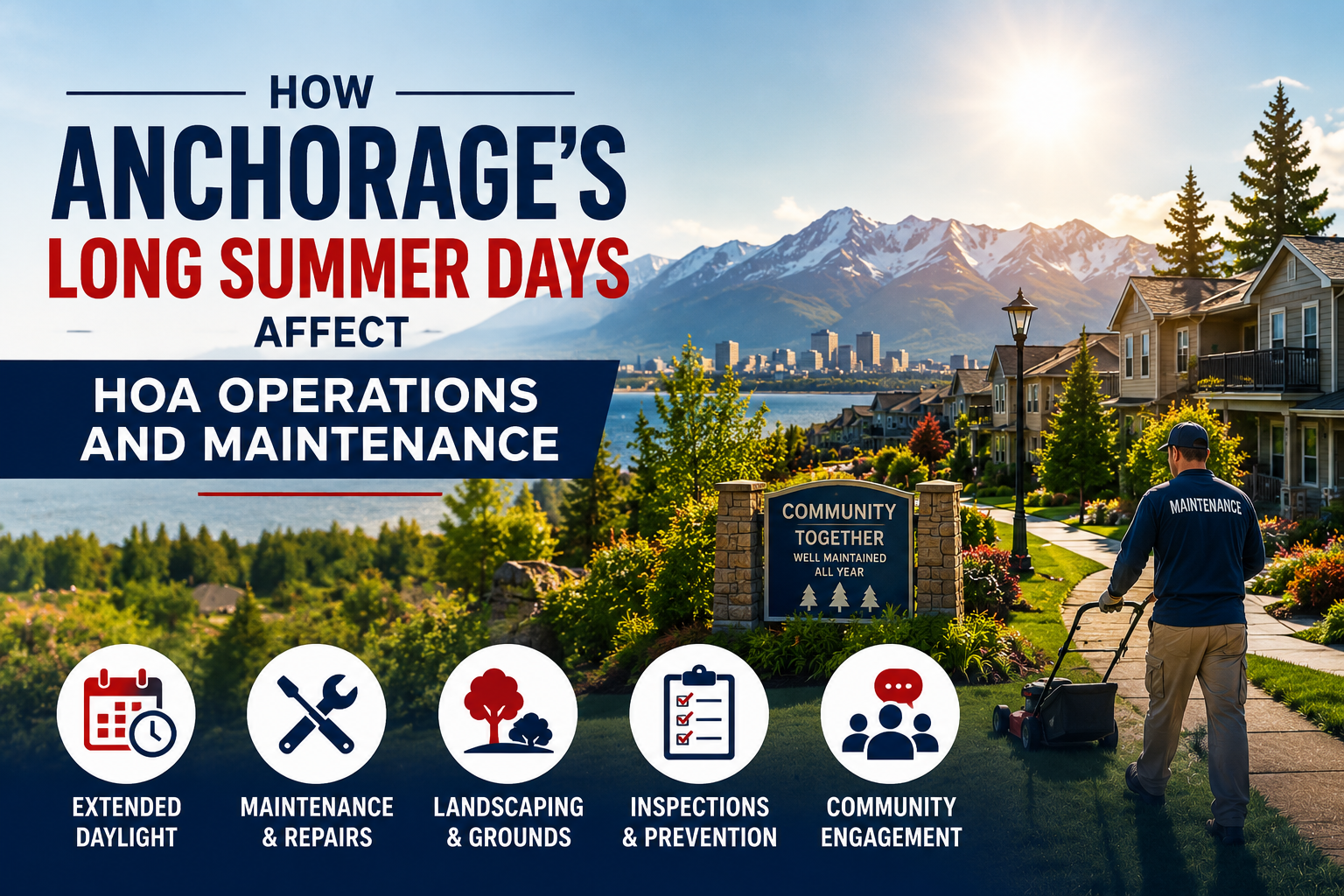
For most parts of the United States, summer simply means warmer weather and longer evenings. In Anchorage, however, summer is a uniquely productive season. With nearly 19 hours of daylight during the peak of summer, Anchorage communities experience a dramatic shift from the long, dark winter months.
For homeowners associations (HOAs), these extended daylight hours create both opportunities and challenges. Summer becomes the primary season for maintenance, capital improvements, landscaping projects, inspections, and community engagement initiatives. Because Alaska’s construction and maintenance window is relatively short, many HOA boards rely heavily on the long summer days to accomplish projects that support the community throughout the year.
Understanding how Anchorage’s summer daylight affects HOA operations can help boards plan more effectively, maximize budgets, and improve community outcomes.
Understanding Anchorage’s Unique Summer Daylight
Anchorage experiences some of the longest summer days in North America.
During June and July, residents enjoy:
- Up to 19 hours of daylight
- Extended twilight hours
- More favorable temperatures for outdoor work
- A compressed but highly productive maintenance season
These conditions create a unique operational environment for HOAs compared to communities in the Lower 48 states.
While winter often focuses on snow management and emergency response, summer is when many associations complete the majority of their annual maintenance and improvement projects.
Why Summer Is the Most Important Maintenance Season
Because winter conditions can limit outdoor work, many maintenance projects must be completed during Anchorage’s warmer months.
Common Summer HOA Projects Include:
- Roofing repairs and replacements
- Exterior painting
- Siding repairs
- Pavement resurfacing
- Drainage improvements
- Landscaping upgrades
- Tree maintenance
- Playground inspections
- Fence repairs
The long daylight hours provide contractors and maintenance crews with more time to work each day, increasing productivity and project efficiency.
Extended Daylight Improves Project Scheduling
One of the biggest advantages of Anchorage’s long summer days is scheduling flexibility.
Benefits Include:
Longer Working Hours
Contractors often have more usable daylight to complete projects safely and efficiently.
Faster Project Completion
Projects that may take weeks elsewhere can sometimes be completed more quickly during Alaska’s extended daylight season.
Reduced Weather Delays
Summer generally offers more predictable conditions compared to spring or fall.
For HOA boards managing multiple projects, this additional flexibility can be invaluable.
Increased Demand for Vendors and Contractors
While summer offers excellent working conditions, it also creates one of the biggest operational challenges for Anchorage HOAs: vendor demand.
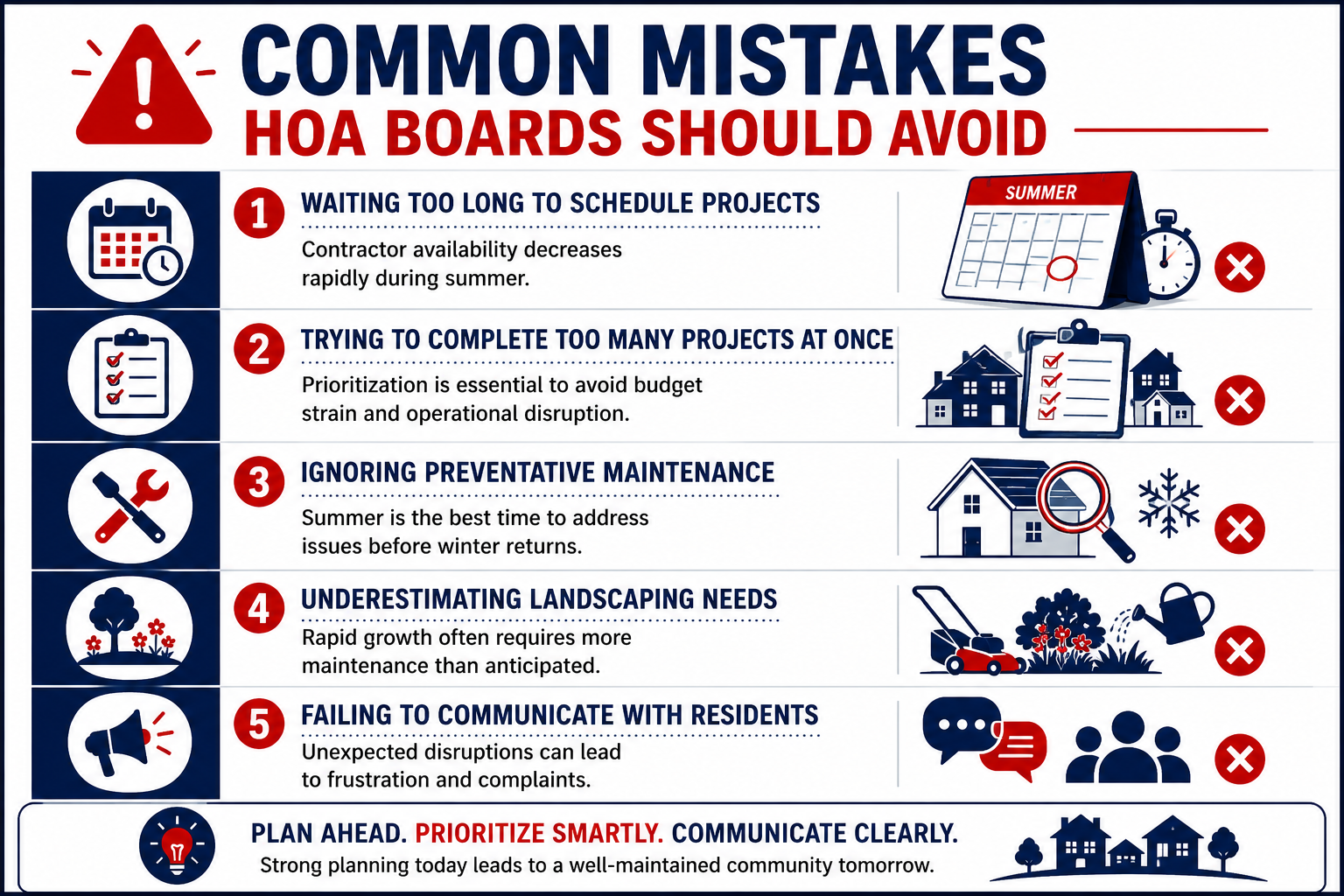
Because the construction and maintenance season is relatively short, many contractors become fully booked months in advance.
Common Challenges:
- Limited contractor availability
- Higher demand for landscaping services
- Longer lead times for materials
- Increased competition among associations
HOAs that begin planning early are often better positioned to secure vendors and avoid project delays.
Landscaping Growth Accelerates
Anchorage’s long summer days can dramatically accelerate plant growth.
Benefits:
- Healthy lawns and landscaping
- Improved curb appeal
- Enhanced community appearance
Challenges:
- More frequent mowing
- Increased irrigation monitoring
- Faster weed growth
- Additional tree and shrub maintenance
Landscaping budgets may need adjustment during summer to accommodate increased maintenance needs.
The University of Alaska Fairbanks offers educational resources on landscaping and plant management specific to Alaska’s climate.
Summer Is Prime Time for Property Inspections
After a long winter, summer provides the best opportunity to inspect community assets thoroughly.
Areas Commonly Inspected:
- Roofs
- Siding
- Foundations
- Parking lots
- Walkways
- Drainage systems
- Common area amenities
Extended daylight improves visibility and allows inspectors to identify issues that may not be apparent during winter months.
These inspections help HOA boards prioritize repairs before colder weather returns.
Increased Resident Activity and Amenity Usage
Summer also changes how residents interact with the community.
Common Trends:
- More outdoor recreation
- Increased use of parks and playgrounds
- Higher foot traffic in common areas
- More community events and gatherings
As a result, HOAs may experience:
- Additional wear on common areas
- More maintenance requests
- Greater demand for communication and coordination
Managing these seasonal changes is an important part of HOA operations.
Opportunities for Community Engagement
The summer season creates ideal conditions for resident engagement.
Popular HOA Activities:
- Community clean-up events
- Landscaping days
- Neighborhood barbecues
- Outdoor meetings
- Volunteer improvement projects
These activities can strengthen community relationships and increase homeowner participation.
Many HOA boards find that resident engagement is significantly higher during the summer months than during winter.
Budget Implications of Summer Operations
While summer provides opportunities to complete projects, it is often the most expensive season for HOA maintenance.
Common Summer Expenses:
- Landscaping contracts
- Capital improvement projects
- Vendor services
- Exterior repairs
- Amenity maintenance
HOA boards should monitor spending carefully to ensure projects remain aligned with budget goals and reserve fund plans.
Mid-year financial reviews are especially important during this period.
Preparing for the Next Winter
One of the most important goals of summer maintenance is preparing for the return of winter.
Summer Projects That Support Winter Readiness:
- Roof repairs
- Drainage improvements
- Pavement maintenance
- Tree trimming
- Exterior sealing and weatherproofing
Addressing these items during summer can help reduce winter-related emergencies and repair costs.
Communication Becomes Even More Important
With multiple projects occurring simultaneously, clear communication is essential.
Residents should be informed about:
- Maintenance schedules
- Temporary closures
- Vendor activity
- Parking restrictions
- Community events
Proactive communication helps reduce confusion and improve resident satisfaction throughout the busy summer season.
The Role of Strategic Summer Planning
Successful HOA operations in Anchorage often depend on making the most of the summer season.
Effective planning helps communities:
- Complete critical repairs
- Improve common areas
- Protect reserve funds
- Increase resident satisfaction
- Prepare for future winters
Because the maintenance window is relatively short, every summer month matters.
When Professional Support Can Help
Managing multiple projects, vendors, inspections, budgets, and resident communications during Anchorage’s busy summer season can be challenging for volunteer HOA boards.
Professional management support can assist with:
- Project scheduling
- Vendor coordination
- Maintenance planning
- Budget tracking
- Resident communication
If your HOA is preparing for summer maintenance or reviewing operational priorities, additional resources may be available through https://www.rpmlastfrontier.com/ or by exploring the contact page for further information.
Final Thoughts
Anchorage’s long summer days create unique opportunities for HOA communities. The extended daylight allows associations to complete maintenance projects, improve community amenities, conduct inspections, and strengthen resident engagement—all within a relatively short seasonal window.
For HOA boards in Anchorage, strategic summer planning is one of the most important factors in maintaining a safe, attractive, and financially healthy community.
By taking advantage of the season’s extended daylight and planning proactively, associations can position themselves for success throughout the year.
This content is provided for general informational and educational purposes only and does not constitute financial, legal, tax, or investment advice. Readers should consult with licensed professionals regarding their specific circumstances.
We are pledged to the letter and spirit of U.S. policy for the achievement of equal housing opportunity throughout the Nation. See Equal Housing Opportunity Statement for more information.
