

Every community has a season when the most progress can be made. For homeowners associations (HOAs) in Anchorage, that season is summer.
Anchorage is known for its remarkably long summer days, with nearly 19 hours of daylight around the summer solstice. While many residents appreciate the extra daylight for outdoor recreation, HOA boards and community managers see something else: an opportunity to complete maintenance projects more efficiently.
From landscaping and exterior repairs to inspections and capital improvements, the extended daylight provides valuable time to accomplish projects that would be difficult—or even impossible—during Alaska’s long winter months.
This article explores how Anchorage’s long summer days improve HOA maintenance efficiency and how communities can maximize this unique seasonal advantage.
Why Summer Is the Most Productive Season for Anchorage HOAs
Unlike many communities across the United States, Anchorage has a relatively short construction and maintenance season.
Snow, freezing temperatures, and limited daylight during much of the year restrict outdoor work.
When summer arrives, HOA communities often concentrate months of maintenance activities into a relatively brief period.
Typical summer projects include:
- Roofing repairs
- Exterior painting
- Landscaping
- Asphalt repairs
- Drainage improvements
- Playground maintenance
- Building inspections
- Tree trimming
- Fence repairs
Because there is so much to accomplish, making efficient use of every available day becomes essential.
Extended Daylight Means More Productive Working Hours
One of the biggest advantages of Anchorage’s summer season is the number of daylight hours available for outdoor work.
Longer daylight allows contractors and maintenance teams to:
- Start projects earlier
- Continue working safely into the evening
- Complete more work within a single day
- Reduce interruptions caused by darkness
For large maintenance projects, these additional hours can significantly improve overall productivity.
Instead of compressing work into an eight-hour daylight window, crews often have much greater scheduling flexibility.
Faster Completion of Maintenance Projects
More available daylight often translates into faster project completion.
Projects such as:
- Roof replacements
- Parking lot resurfacing
- Exterior painting
- Sidewalk repairs
- Fence installation
can often progress more quickly when crews have additional daylight available.
Completing projects efficiently benefits both HOA boards and residents by reducing disruptions and allowing communities to move on to other maintenance priorities sooner.
Better Scheduling Flexibility
Long summer days also provide HOA boards with more options when coordinating contractors.
Instead of trying to fit every task into limited daytime hours, vendors may be able to:
- Stagger work schedules
- Coordinate multiple crews
- Complete inspections later in the day
- Reduce downtime between tasks
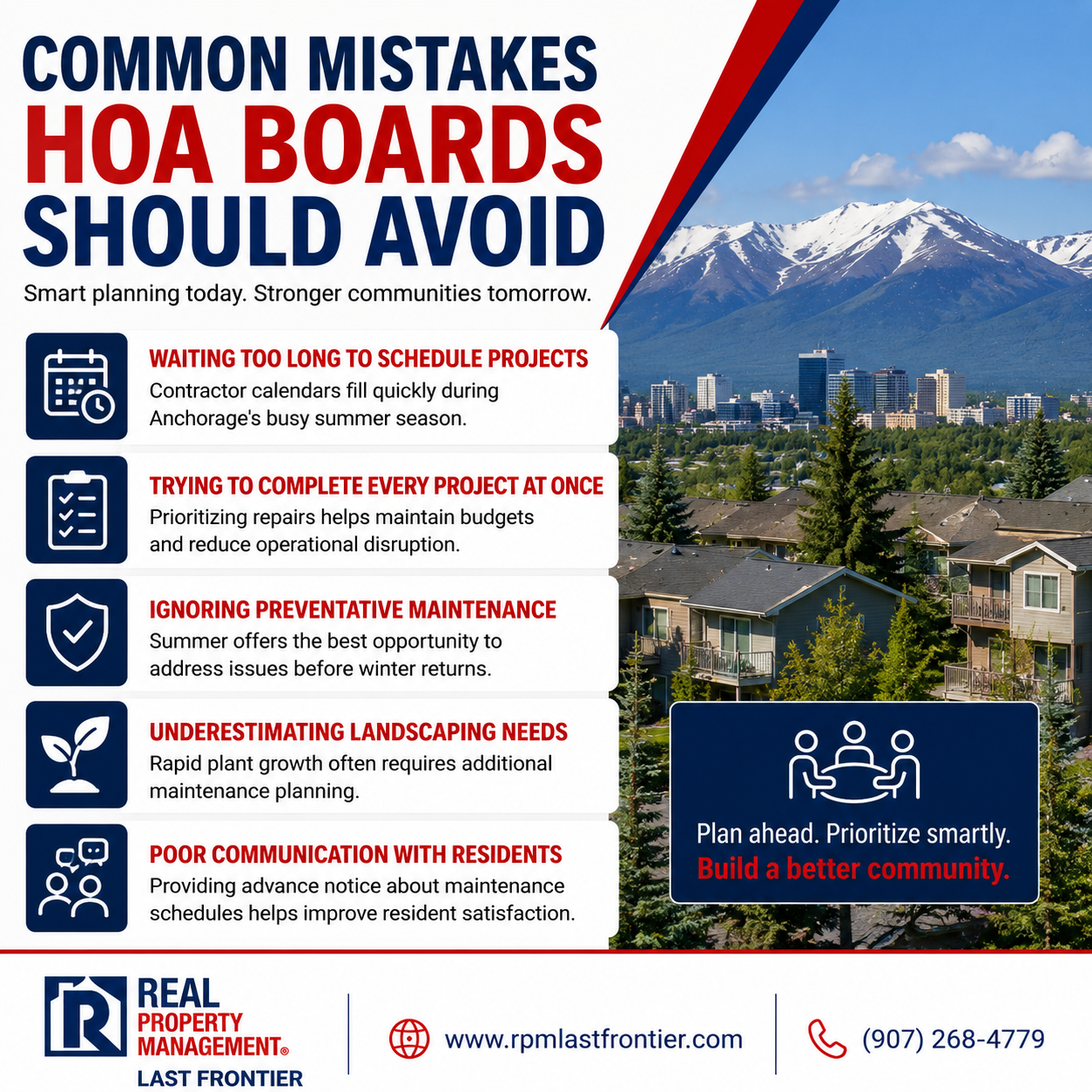
This flexibility becomes especially valuable during Anchorage’s busy construction season when contractor schedules fill quickly.
More Time for Thorough Property Inspections
Summer isn’t just for repairs—it’s also the ideal time for comprehensive inspections.
Extended daylight makes it easier to inspect:
- Roof systems
- Building exteriors
- Foundations
- Parking lots
- Sidewalks
- Drainage systems
- Landscaping
- Retaining walls
Improved visibility allows maintenance professionals to identify issues that may have developed during the winter but remained hidden beneath snow and ice.
These inspections help HOA boards prioritize repairs before colder weather returns.
Improved Landscaping Maintenance
Landscaping is one of the areas that benefits most from Anchorage’s extended daylight.
The longer growing season encourages:
- Healthier lawns
- Fuller shrubs
- Faster plant growth
However, it also creates additional maintenance needs.
HOAs may need to increase:
- Lawn mowing
- Irrigation monitoring
- Weed control
- Tree trimming
- Garden maintenance
Proper planning ensures landscaping remains attractive without overwhelming maintenance budgets.
The University of Alaska Fairbanks offers guidance on selecting cold-hardy plants and landscaping practices appropriate for Alaska’s climate.
More Efficient Preventative Maintenance
Preventative maintenance is one of the most cost-effective investments an HOA can make.
Summer provides an ideal opportunity to complete projects such as:
- Roof inspections
- Gutter cleaning
- Exterior caulking
- Drainage improvements
- Crack sealing
- Pressure washing
- Exterior painting
Addressing these issues before winter helps reduce emergency repairs and extend the life of community assets.
Better Conditions for Exterior Construction
Many construction materials perform best under warmer, drier conditions.
Summer provides better conditions for:
Asphalt
Proper temperatures improve curing and durability.
Concrete
Warm weather supports stronger curing and finishing.
Paint
Exterior coatings adhere better in suitable temperatures.
Roofing Materials
Installation is generally more efficient and less susceptible to weather-related delays.
Taking advantage of favorable conditions helps improve project quality.
Opportunities to Complete Multiple Projects
Because of the extended daylight, HOA boards can often coordinate several projects simultaneously.
Examples include:
- Landscaping while sidewalks are repaired
- Roof inspections during exterior painting
- Drainage improvements alongside asphalt work
Careful scheduling minimizes disruption while improving overall efficiency.
Increased Resident Engagement
Long summer days encourage residents to spend more time outdoors.
This creates opportunities for:
- Community clean-up events
- Volunteer landscaping projects
- Resident meetings
- Playground improvements
- Neighborhood beautification initiatives
Higher resident visibility also allows boards to communicate maintenance activities more effectively.
Contractor Productivity Improves
Construction crews often benefit from:
- Longer uninterrupted work periods
- Improved site visibility
- Reduced setup and shutdown time
- More consistent daily progress
These factors can improve scheduling accuracy and reduce overall project duration.
However, contractor demand also increases significantly during summer.
Communities that begin planning early are generally more successful in securing preferred vendors.
Budget Planning Remains Essential
While longer days improve efficiency, they don’t eliminate the need for sound financial planning.
HOA boards should continue to monitor:
- Project costs
- Reserve fund balances
- Contractor invoices
- Material price changes
- Unexpected maintenance expenses
Mid-year financial reviews help ensure projects remain aligned with community budgets.
The Community Associations Institute provides educational resources on reserve planning, budgeting, and maintenance best practices for community associations.
Preparing for the Next Winter Starts in Summer
Although summer feels far removed from winter, many of the most important winter preparations occur during the warmest months.
Summer is the ideal time to:
- Repair roofing systems
- Improve drainage
- Seal pavement cracks
- Replace damaged siding
- Trim hazardous trees
- Inspect foundations
Completing these projects before temperatures drop helps reduce winter emergencies and long-term repair costs.
When Professional Support Can Help
Managing multiple contractors, inspections, budgets, maintenance schedules, and resident communications can be challenging for volunteer HOA boards.
Professional association management can assist with:
- Maintenance planning
- Vendor coordination
- Budget monitoring
- Reserve planning
- Project oversight
- Resident communication
If your HOA is preparing for seasonal maintenance or long-term planning, you can explore additional educational resources by visiting our Resource Page or reaching out through the contact page to learn more about effective community management practices.
Final Thoughts
Anchorage’s long summer days provide a unique opportunity for HOA communities to maximize productivity during a relatively short maintenance season.
By planning projects early, taking advantage of extended daylight, prioritizing preventative maintenance, and coordinating contractors effectively, HOA boards can improve operational efficiency while protecting community assets.
For associations in Anchorage, every hour of summer daylight is an opportunity to strengthen the community before the challenges of winter return.
This content is provided for general informational and educational purposes only and does not constitute financial, legal, tax, or investment advice. Readers should consult with licensed professionals regarding their specific circumstances.
We are pledged to the letter and spirit of U.S. policy for the achievement of equal housing opportunity throughout the Nation. See Equal Housing Opportunity Statement for more information.
