

For many homeowners associations (HOAs), the middle of the year is more than just the halfway point on the calendar—it’s a valuable opportunity to evaluate financial performance, reassess priorities, and prepare for the months ahead. While annual budgets provide a roadmap, changing expenses, unexpected repairs, and seasonal maintenance needs can quickly alter financial projections.
In Anchorage, where weather conditions, infrastructure demands, and maintenance costs can vary significantly throughout the year, a mid-year budget review is especially important.
Whether your HOA is ahead of schedule or facing unexpected expenses, proactive financial planning can help your community remain stable, transparent, and prepared for future needs.
Why Mid-Year Budget Reviews Matter
Many HOA boards create an annual budget at the beginning of the fiscal year and revisit it only when problems arise. However, waiting until year-end can limit options and increase financial stress.
A mid-year review allows boards to:
- Compare actual spending against projections
- Identify budget variances early
- Prepare for upcoming seasonal expenses
- Evaluate reserve fund contributions
- Adjust priorities before the next budget cycle
Regular financial reviews help prevent surprises and support better decision-making.
Start with a Year-to-Date Financial Analysis
The first step is reviewing how the HOA has performed financially so far.
Key Reports to Review:
Income Statements
Analyze:
- Assessment income
- Late fees
- Other revenue sources
Expense Reports
Compare:
- Actual expenses
- Budgeted expenses
- Year-over-year spending trends
Balance Sheets
Review:
- Operating account balances
- Reserve fund balances
- Outstanding liabilities
This financial snapshot helps determine whether the community is on track or needs adjustments.
Evaluate Winter and Spring Maintenance Costs
In Anchorage, winter and spring maintenance often account for a significant portion of annual expenses.
Common Costs Include:
- Snow removal
- Ice management
- Emergency repairs
- Roof maintenance
- Pavement repairs
- Landscaping restoration
Questions to ask:
- Were winter expenses higher than expected?
- Did snow removal exceed budget projections?
- Were emergency repairs necessary?
Understanding these costs helps boards prepare more accurately for future seasons.
Review Reserve Fund Performance
Reserve funds are critical for long-term financial stability.
Mid-year is an ideal time to assess:
- Current reserve balances
- Reserve contributions made to date
- Upcoming capital projects
- Reserve study recommendations
The Community Associations Institute recommends regularly reviewing reserve funding levels to ensure communities remain financially prepared for major repairs and replacements.
Questions to Consider:
- Are reserve contributions on schedule?
- Have project costs increased due to inflation?
- Does the reserve study need updating?
Account for Inflation and Rising Costs
Construction materials, labor, fuel, and contractor costs have fluctuated significantly in recent years.
HOA boards should evaluate whether current assumptions still reflect market conditions.
Areas Commonly Impacted:
- Landscaping contracts
- Maintenance services
- Utilities
- Insurance premiums
- Capital improvement projects
Ignoring inflation can lead to budget shortfalls later in the year.
Prepare for Summer and Fall Projects
Mid-year planning should include upcoming seasonal expenses.
Common Summer and Fall Projects:
- Landscaping upgrades
- Asphalt repairs
- Exterior painting
- Drainage improvements
- Roofing projects
- Tree maintenance
Review project schedules and contractor estimates to determine whether adjustments are needed.
Early planning helps avoid last-minute financial decisions.
Analyze Delinquency Rates
Assessment collections directly impact HOA financial health.
Review:
- Current delinquency rates
- Outstanding homeowner balances
- Collection trends
Even a small increase in delinquent accounts can affect cash flow and operational planning.
If delinquencies are increasing, boards may need to revisit collection procedures and financial forecasts.
Evaluate Insurance Costs and Coverage
Insurance costs continue to rise in many markets, including Alaska.
Mid-year is a good time to review:
- Current coverage levels
- Policy renewal timelines
- Potential premium increases
- Claims activity
Insurance expenses can significantly affect next year’s budget if not monitored carefully.
Revisit Vendor Contracts
Many HOA service contracts renew annually.
Consider Reviewing:
- Landscaping agreements
- Maintenance contracts
- Snow removal services
- Security contracts
- Janitorial services
Questions to ask:
- Are vendors meeting expectations?
- Have costs increased?
- Are there opportunities to renegotiate terms?
Evaluating contracts now allows more time to plan for future renewals.
Build a Contingency Plan
Unexpected expenses are inevitable.
Examples include:
- Storm damage
- Water intrusion
- Equipment failures
- Emergency repairs
A mid-year review should assess whether contingency funds are sufficient to address unforeseen issues.
Communities with strong contingency planning are often better equipped to manage financial surprises.
Improve Financial Transparency with Residents
Financial transparency helps build trust within the community.
Consider sharing updates on:
- Budget performance
- Major projects
- Reserve fund status
- Upcoming expenses
Residents are often more supportive of financial decisions when they understand the reasoning behind them.
Clear communication can reduce misunderstandings and improve community engagement.
Begin Planning for Next Year’s Budget
One of the greatest benefits of a mid-year review is the opportunity to start thinking ahead.
Questions for Future Planning:
- Which expenses were underestimated?
- What maintenance projects are expected next year?
- Are reserve contributions adequate?
- Should assessments be adjusted?
Early preparation often results in a more accurate and realistic budget process.
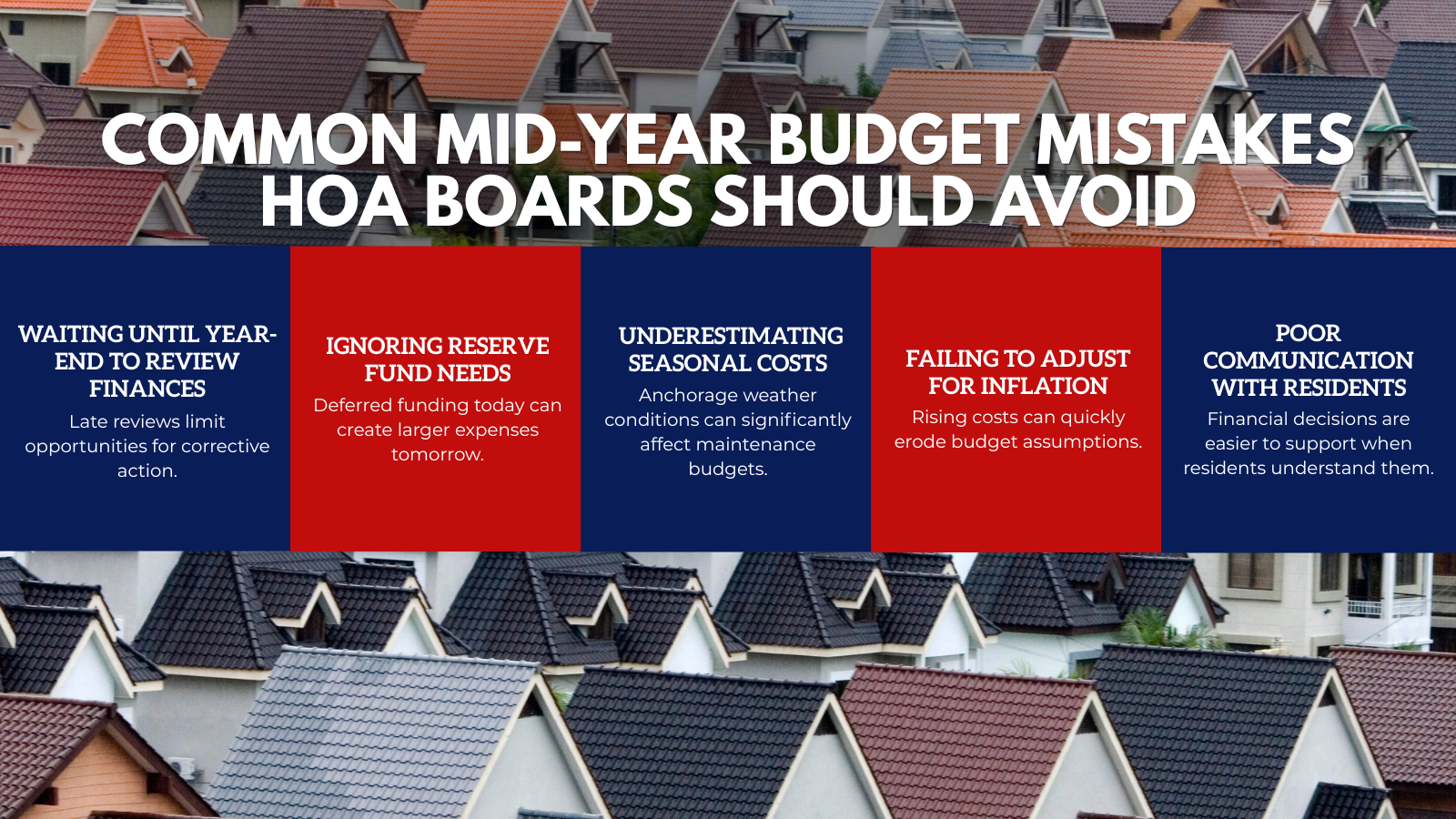
Common Mid-Year Budget Mistakes HOA Boards Should Avoid
The Role of Strategic Financial Planning
A strong HOA budget is more than a spreadsheet—it’s a strategic tool that supports community goals.
Effective mid-year planning helps boards:
- Improve financial stability
- Protect reserve funds
- Prioritize maintenance projects
- Reduce financial surprises
- Support long-term property values
For Anchorage communities, where seasonal maintenance demands can be significant, proactive budgeting is especially important.
When Professional Support Can Help
Many HOA board members are volunteers balancing community responsibilities with their personal and professional commitments.
Professional management support can assist with:
- Budget preparation and analysis
- Financial reporting
- Reserve planning
- Vendor management
- Long-term forecasting
If your HOA is reviewing its financial position or preparing for future projects, additional resources may be available through association page or by connecting through the contact page for further information.
Final Thoughts
A mid-year budget review provides HOA boards with an opportunity to assess performance, address challenges, and prepare for the future.
For communities in Anchorage, where weather conditions and maintenance needs can significantly impact finances, proactive planning is one of the most effective ways to maintain stability and avoid unexpected costs.
By reviewing financial reports, evaluating reserve funds, preparing for upcoming projects, and communicating openly with residents, HOA boards can position their communities for long-term success.
This content is provided for general informational and educational purposes only and does not constitute financial, legal, tax, or investment advice. Readers should consult with licensed professionals regarding their specific circumstances.
We are pledged to the letter and spirit of U.S. policy for the achievement of equal housing opportunity throughout the Nation. See Equal Housing Opportunity Statement for more information.
