

For homeowners associations (HOAs), planning ahead is always important—but in Anchorage, it is essential. Unlike many parts of the country where outdoor maintenance and construction can take place for much of the year, Anchorage has a relatively short window for completing major projects. Long winters, freezing temperatures, snow cover, and unpredictable shoulder seasons mean that HOA boards often have only a few months to complete repairs, maintenance, and capital improvements before cold weather returns.
Communities that begin planning too late may struggle to secure contractors, stay within budget, or complete projects before the construction season ends. By understanding the challenges of Alaska’s climate and preparing well in advance, HOA boards can make better financial decisions, improve project outcomes, and help preserve community assets.
This guide explores why Anchorage’s short construction season requires earlier HOA planning and outlines practical strategies for staying ahead.
Understanding Anchorage’s Construction Season
Anchorage’s construction season is significantly shorter than in many other regions of the United States. While weather conditions vary each year, most exterior construction projects are concentrated between late spring and early fall, when temperatures are suitable for paving, roofing, painting, landscaping, and structural repairs.
Outside this window, projects may face challenges such as:
- Frozen ground
- Snow accumulation
- Limited daylight during fall and winter
- Material performance issues in cold temperatures
- Contractor availability shifting to emergency winter services
This compressed timeline makes scheduling and preparation especially important for HOA communities.
Why Early HOA Planning Matters
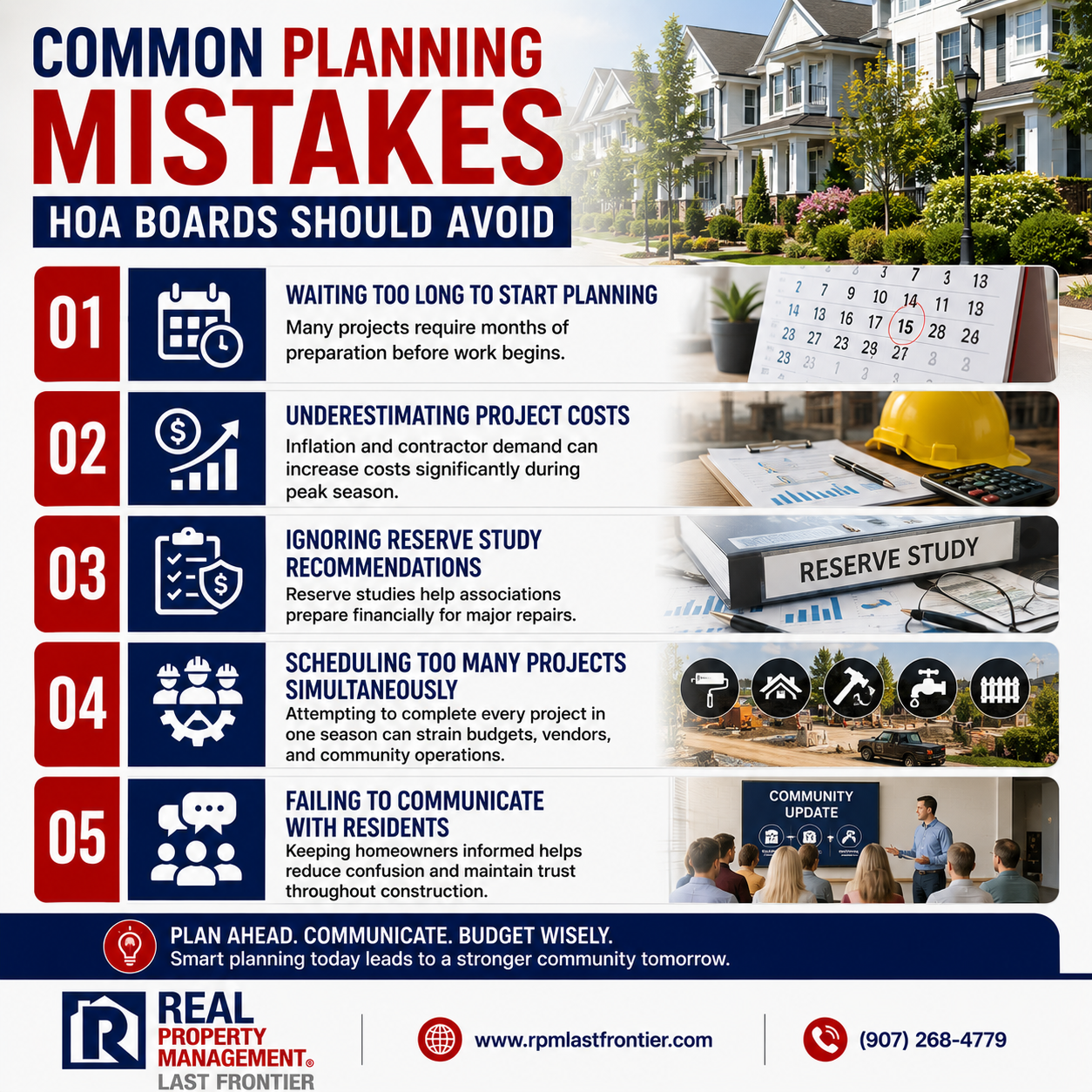
Waiting until summer to begin planning often means competing with countless homeowners, commercial property owners, and municipal projects for the same contractors and materials.
Planning early allows HOA boards to:
- Secure preferred contractors
- Obtain competitive bids
- Schedule inspections before work begins
- Complete projects before weather conditions change
- Better manage budgets and reserve funds
Rather than reacting to problems as they arise, early planning enables associations to take a proactive approach to community maintenance.
High Demand for Contractors During Summer
Once spring arrives in Anchorage, construction activity increases rapidly.
Contractors who specialize in:
- Roofing
- Asphalt paving
- Exterior painting
- Landscaping
- Concrete work
- Drainage improvements
often fill their schedules months in advance.
Associations that delay project planning may experience:
- Longer wait times
- Higher labor costs
- Limited contractor options
- Project delays extending into the following year
Obtaining proposals during late winter or early spring can improve scheduling flexibility and provide more time to compare vendors.
Weather Can Still Cause Delays
Although summer offers the best conditions for construction, Alaska weather remains unpredictable.
Unexpected rain, cool temperatures, or wind can affect:
- Painting projects
- Asphalt installation
- Concrete curing
- Roofing work
- Exterior repairs
Because weather delays are always possible, HOA boards should build flexibility into project schedules rather than assuming every project will proceed exactly as planned.
Reserve Funds Should Be Reviewed Before Construction Begins
Major maintenance projects often rely on HOA reserve funds.
Before scheduling construction, boards should evaluate:
- Current reserve balances
- Planned capital improvements
- Updated reserve studies
- Estimated contractor costs
The Community Associations Institute recommends regularly reviewing reserve studies to help associations prepare for long-term repair and replacement costs.
Early financial planning helps avoid last-minute budget adjustments or unexpected special assessments.
Prioritize Projects Based on Urgency
Not every repair needs to happen at once.
One effective strategy is to categorize projects according to priority.
Immediate Priorities
Projects involving safety or active property damage should receive the highest priority.
Examples include:
- Roof leaks
- Structural concerns
- Drainage failures
- Damaged walkways
- Electrical hazards
Medium-Priority Projects
These projects improve the condition of the community but may be scheduled after urgent repairs.
Examples include:
- Exterior painting
- Fence repairs
- Landscaping improvements
- Parking lot striping
Long-Term Capital Improvements
Larger projects often require additional planning and reserve funding.
Examples include:
- Roof replacement
- Siding replacement
- Asphalt resurfacing
- Playground upgrades
- Community clubhouse renovations
Prioritizing projects helps boards make better use of the limited construction season.
Material Lead Times Are Becoming Longer
Supply chain challenges continue to affect many construction materials.
Common items such as:
- Roofing shingles
- Lumber
- Windows
- Mechanical equipment
- Asphalt products
may require extended lead times.
Ordering materials well before construction begins reduces the risk of delays caused by unavailable inventory.
Summer Is the Best Time for Preventative Maintenance
Preventative maintenance often costs far less than emergency repairs.
During Anchorage’s construction season, HOAs should consider:
- Roof inspections
- Drainage improvements
- Exterior caulking
- Pavement crack sealing
- Gutter repairs
- Tree trimming
Completing these projects during warmer months helps prepare the community for the next winter.
Landscaping Requires Early Planning Too
Landscaping is another area where timing matters.
Anchorage’s growing season is relatively short, making early scheduling important for:
- Lawn restoration
- Tree planting
- Irrigation repairs
- Shrub replacement
- Erosion control
The University of Alaska Fairbanks provides guidance on selecting plants and landscaping practices suitable for Alaska’s climate.
Choosing native or cold-hardy plants can also reduce long-term maintenance costs.
Communicate Project Plans with Residents
Construction projects affect residents in many ways.
HOA boards should communicate:
- Project timelines
- Parking restrictions
- Temporary closures
- Noise expectations
- Safety precautions
Providing advance notice helps minimize frustration and improves resident cooperation throughout the construction season.
Coordinate Vendor Contracts Early
Vendor selection should begin well before summer arrives.
When evaluating contractors, consider:
- Alaska experience
- Licensing and insurance
- References from similar communities
- Warranty coverage
- Communication practices
Early coordination provides more time to negotiate contracts and clarify project expectations.
Review Insurance Before Major Projects
Construction projects present additional risks.
Before work begins, associations should verify:
- Contractor insurance certificates
- Liability coverage
- Workers’ compensation insurance
- HOA insurance requirements
The State of Alaska Department of Commerce, Community, and Economic Development offers resources for verifying professional licensing and business registrations.
Long-Term Benefits of Early Planning
Communities that begin planning early often experience:
- Better project scheduling
- Improved contractor availability
- More accurate budgeting
- Reduced emergency repairs
- Better protection of community assets
- Higher resident satisfaction
Over time, consistent planning supports stronger financial stability and helps preserve property values.
Anchorage’s short construction season makes early planning one of the most important responsibilities for any HOA board.
From contractor scheduling and reserve planning to preventative maintenance and resident communication, every decision made before summer can influence the success of projects throughout the year.
By planning ahead, prioritizing repairs, reviewing finances, and coordinating vendors early, HOA communities in Anchorage can make the most of Alaska’s limited construction window while protecting their investments and creating well-maintained neighborhoods for years to come.
This content is provided for general informational and educational purposes only and does not constitute financial, legal, tax, or investment advice. Readers should consult with licensed professionals regarding their specific circumstances.
We are pledged to the letter and spirit of U.S. policy for the achievement of equal housing opportunity throughout the Nation. See Equal Housing Opportunity Statement for more information.
